
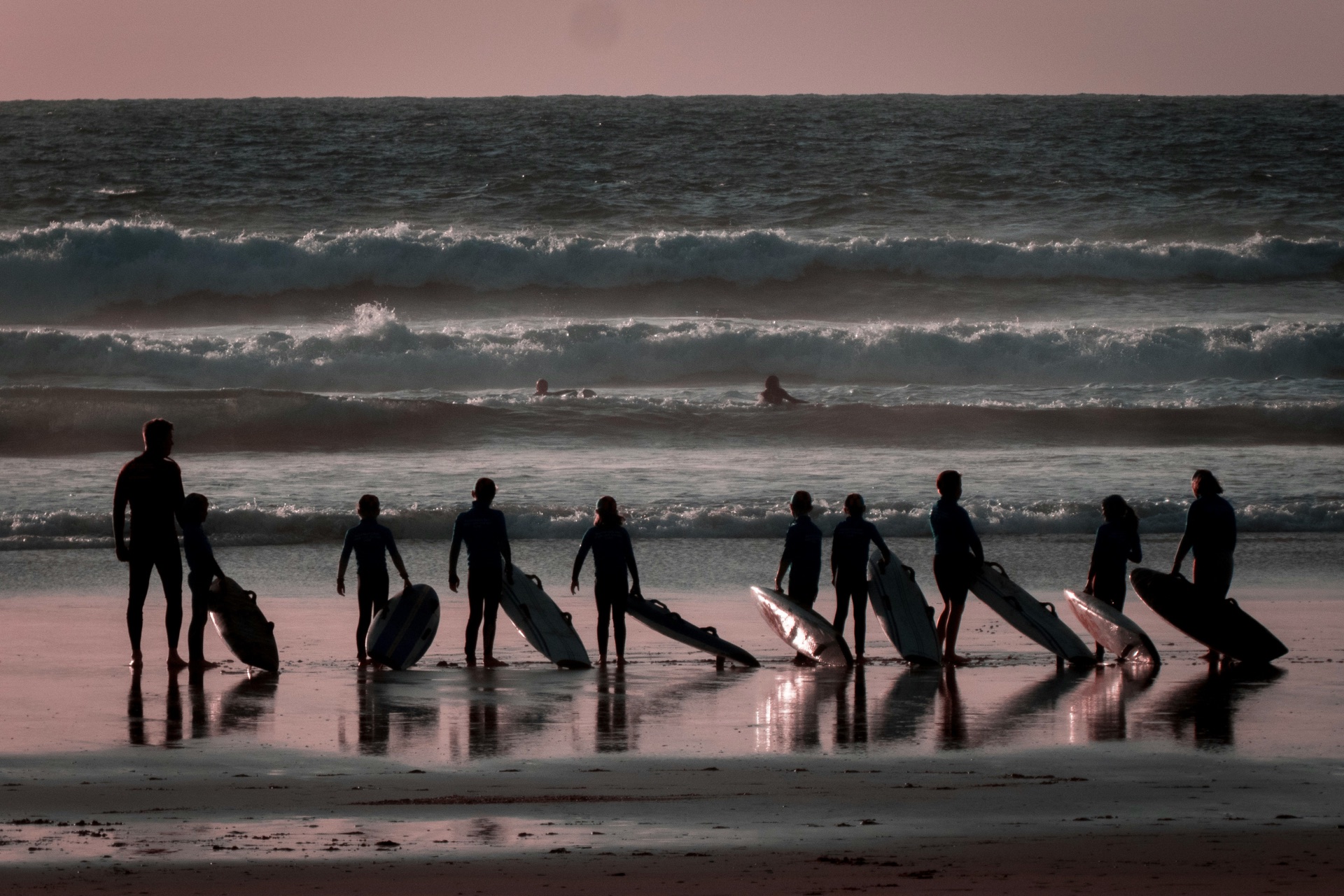
Surfing in the Algarve: A Beginner's Complete Guide
The Algarve is one of Europe's most welcoming destinations for first-time surfers. Warm Atlantic water, consistent swell, and a network of professional surf schools make it the ideal place to catch your first wave. Our team has spent years working with beginners here, and in this guide we share everything you need to know before you go.
Best Beginner Spots
Not all surf beaches are equal — for beginners, the right conditions make all the difference. Here are three spots our team recommends:
Arrifana is a sheltered bay on the Vicentina coast, about an hour north of Lagos. The natural bowl shape of the bay produces softer, more forgiving waves than open Atlantic beaches. It's quieter than the main tourist spots, which means more space to learn without feeling crowded.
Amado Beach sits within the Vicentina Natural Park. Its wide sandy stretch and consistent beach break make it a favourite among surf schools. The waves here are reliable without being powerful, and the park setting means the surroundings are strikingly beautiful.
Praia da Cordoama, a few kilometres from Amado, offers a similar style of break but tends to attract a slightly more advanced crowd. That said, on calmer days it's perfectly suitable for beginners who've already had a few lessons and want to practise more independently.
What to Expect from Your First Lesson
A typical beginner lesson runs two to three hours. You'll start on the sand — learning to read the ocean, understanding basic safety, and practising the pop-up movement (the motion of going from lying to standing on the board) before you ever touch the water.
In the water, your instructor will guide you to the whitewash zone — the broken, foamy waves close to shore. These are slower and easier to balance on. Most beginners stand up for the first time within an hour.
Regarding fitness: you don't need to be athletic. A reasonable level of mobility and the ability to swim confidently is all that's required. Our team always asks about swimming ability before booking anyone into a session.
What to wear: your school will provide a wetsuit. The Algarve water temperature typically ranges from 17°C in early spring to 23°C in late summer — a standard 3/2mm wetsuit is comfortable for most of the year.
Book your lessons for the morning. Wind conditions are typically calmer before noon, which means cleaner waves and a better experience for beginners. Afternoon sessions can be windier and choppier, making balance harder.
When to Go
The surfing season in the Algarve is genuinely year-round, but for beginners the sweet spot is May through October. During these months, the water temperature is comfortable, the swell is consistent without being overpowering, and days are long enough to fit in a morning session and still have plenty of afternoon to explore.
July and August are peak summer months — schools are busier and prices are higher. If you can travel in May, June, September, or October, you'll find smaller groups, lower prices, and the same quality waves.
Winter months (November to March) bring larger swells that are better suited to intermediate and advanced surfers. Our team does run winter programmes, but we recommend them only for those with at least a season's experience.
How We Can Help
Our team arranges surf camp packages that combine accommodation, daily lessons, and transport from Faro or Lagos. We work with accredited schools whose instructors speak Polish and English, so communication is never a barrier.
All our surf packages include: airport transfers, accommodation within walking distance of the beach, daily group lessons (with optional private sessions available), and access to equipment throughout your stay.
If you've been thinking about learning to surf but don't know where to start, contact us and we'll put together a package that matches your level, budget, and travel dates.